
Universal Pipette Tips
Disposable pipette tips designed to fit single and multichannel pipettes from most manufacturers; offer acceptable performance compared to pipette specific tips and can be used with a variety of pipette models.
Single-use universal pipette tips are designed for compatibility with most mechanical and electronic single and multichannel pipettors.
Universal pipette tips are available in a range of types, sizes, colors, styles, and packaging configurations and may be designed for specific purposes or tasks.
- Capacity or volume based on the pipettor size
- Filters to reduce contamination and cross-contamination
- Color
- Sterility or autoclavability
- Tip style: beveled, tapered, wide bore, round, flat, or gel-loading
- Length: short or extended
- Purity: metal-free or DNase-, RNase-, ATP-, Bioburden-, PCR inhibitor-, endotoxin-, or pyrogen-free for genomic and biologic applications
- Surface treatments to reduce retention
- Packaging options to help facilitate re-stocking or eliminate waste

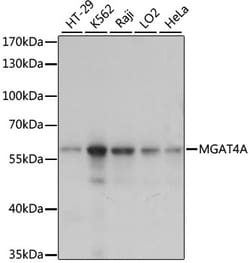
ABclonal Technology MGAT4A Rabbit pAb

This gene encodes a key glycosyltransferase that regulates the formation of tri- and multiantennary branching structures in the Golgi apparatus. The encoded protein, in addition to the related isoenzyme B, catalyzes the transfer of N-acetylglucosamine (GlcNAc) from UDP-GlcNAc in a beta-1,4 linkage to the Man-alpha-1,3-Man-beta-1,4-GlcNAc arm of R-Man-alpha-1,6(GlcNAc-beta-1,2-Man-alpha-1,3)Man-beta-1,4-GlcNAc-beta-1,4-GlcNAc-beta-1-Asn. The encoded protein may play a role in regulating the availability of serum glycoproteins, oncogenesis, and differentiation.

![ABclonal Technology [KO Validated] CRMP2/DPYSL2 Rabbit pAb](https://assets.fishersci.com/TFS-Assets/CCG/product-images/5000106605.jpg-250.jpg)
ABclonal Technology [KO Validated] CRMP2/DPYSL2 Rabbit pAb
This gene encodes a member of the collapsin response mediator protein family. Collapsin response mediator proteins form homo- and hetero-tetramers and facilitate neuron guidance, growth and polarity. The encoded protein promotes microtubule assembly and is required for Sema3A-mediated growth cone collapse, and also plays a role in synaptic signaling through interactions with calcium channels. This gene has been implicated in multiple neurological disorders, and hyperphosphorylation of the encoded protein may play a key role in the development of Alzheimers disease. Alternatively spliced transcript variants encoding multiple isoforms have been observed for this gene.
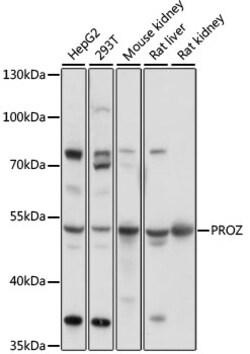
ABclonal Technology PROZ Rabbit pAb
This gene encodes a liver vitamin K-dependent glycoprotein that is synthesized in the liver and secreted into the plasma. The encoded protein plays a role in regulating blood coagulation by complexing with protein Z-dependent protease inhibitor to directly inhibit activated factor X at the phospholipid surface. Deficiencies in this protein are associated with an increased risk of ischemic arterial diseases and fetal loss. Mutations in this gene are the cause of protein Z deficiency. Alternate splicing results in multiple transcript variants.
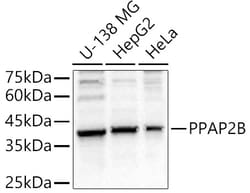
ABclonal Technology PPAP2B Rabbit pAb
The protein encoded by this gene is a member of the phosphatidic acid phosphatase (PAP) family. PAPs convert phosphatidic acid to diacylglycerol, and function in de novo synthesis of glycerolipids as well as in receptor-activated signal transduction mediated by phospholipase D. This protein is a membrane glycoprotein localized at the cell plasma membrane. It has been shown to actively hydrolyze extracellular lysophosphatidic acid and short-chain phosphatidic acid. The expression of this gene is found to be enhanced by epidermal growth factor in Hela cells.
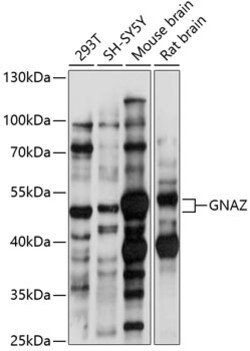
ABclonal Technology GNAZ Rabbit pAb
The protein encoded by this gene is a member of a G protein subfamily that mediates signal transduction in pertussis toxin-insensitive systms. This encoded protein may play a role in maintaining the ionic balance of perilymphatic and endolymphatic cochlear fluids.
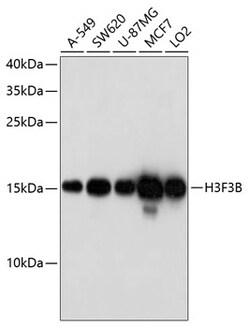
ABclonal Technology H3F3B Rabbit pAb
Histones are basic nuclear proteins that are responsible for the nucleosome structure of the chromosomal fiber in eukaryotes. Two molecules of each of the four core histones (H2A, H2B, H3, and H4) form an octamer, around which approximately 146 bp of DNA is wrapped in repeating units, called nucleosomes. The linker histone, H1, interacts with linker DNA between nucleosomes and functions in the compaction of chromatin into higher order structures. This gene contains introns and its mRNA is polyadenylated, unlike most histone genes. The protein encoded by this gene is a replication-independent histone that is a member of the histone H3 family. Pseudogenes of this gene have been identified on the X chromosome, and on chromosomes 5, 13 and 17.
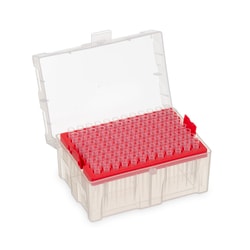
Alkali Scientific PurePoint™ Sterile Tips Racked - Low Retention, 250uL, 960/Pk
Our PurePoint™ Sterile Racked LTS Tips fit Rainin LTS Pipettes and are made of premium-grade low retention resin that enables the most accurate delivery of liquids. They also eject with up to 85% less force than conventional pipette tips and may help reduce repetitive pipetting injuries. They are RNAse, DNAse, Pyrogen Free, and range in volume from 20µL to 1000µL. Low forces — reduces tip ejection force up to 85% Low retention — most precise, accurate delivery Stable new rack designed for multichannel pipettors Compatibile with Rainin LTS™ LiteTouch™ and XLS+ Pipettes RNAse, DNAse, Pyrogen Free Sterile
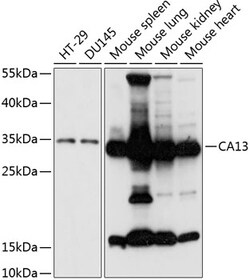
ABclonal Technology CA13 Rabbit pAb
Predicted to enable carbonate dehydratase activity. Predicted to be involved in one-carbon metabolic process. Predicted to be located in intracellular membrane-bounded organelle and myelin sheath. Predicted to be active in cytosol.
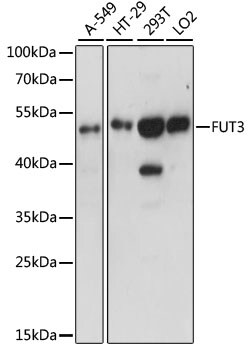
ABclonal Technology FUT3 Rabbit pAb
The Lewis histo-blood group system comprises a set of fucosylated glycosphingolipids that are synthesized by exocrine epithelial cells and circulate in body fluids. The glycosphingolipids function in embryogenesis, tissue differentiation, tumor metastasis, inflammation, and bacterial adhesion. They are secondarily absorbed to red blood cells giving rise to their Lewis phenotype. This gene is a member of the fucosyltransferase family, which catalyzes the addition of fucose to precursor polysaccharides in the last step of Lewis antigen biosynthesis. It encodes an enzyme with alpha(1,3)-fucosyltransferase and alpha(1,4)-fucosyltransferase activities. Mutations in this gene are responsible for the majority of Lewis antigen-negative phenotypes. Differences in the expression of this gene are associated with host susceptibility to viral infection.
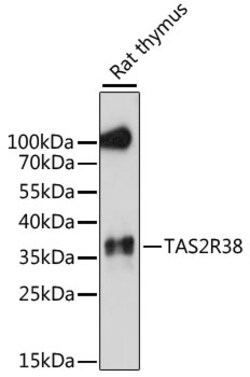
ABclonal Technology TAS2R38 Rabbit pAb
This gene encodes a seven-transmembrane G protein-coupled receptor that controls the ability to taste glucosinolates, a family of bitter-tasting compounds found in plants of the Brassica sp. Synthetic compounds phenylthiocarbamide (PTC) and 6-n-propylthiouracil (PROP) have been identified as ligands for this receptor and have been used to test the genetic diversity of this gene. Although several allelic forms of this gene have been identified worldwide, there are two predominant common forms (taster and non-taster) found outside of Africa. These alleles differ at three nucleotide positions resulting in amino acid changes in the protein (A49P, A262V, and V296I) with the amino acid combination PAV identifying the taster variant (and AVI identifying the non-taster variant).
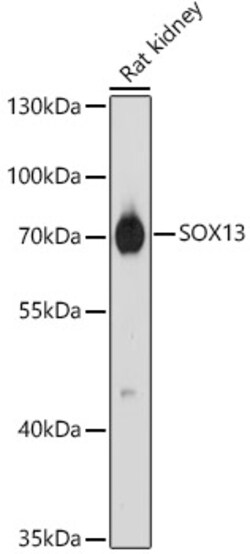
ABclonal Technology SOX13 Rabbit pAb
This gene encodes a member of the SOX (SRY-related HMG-box) family of transcription factors involved in the regulation of embryonic development and in the determination of cell fate. The encoded protein may act as a transcriptional regulator after forming a protein complex with other proteins. It has also been determined to be a type-1 diabetes autoantigen, also known as islet cell antibody 12.
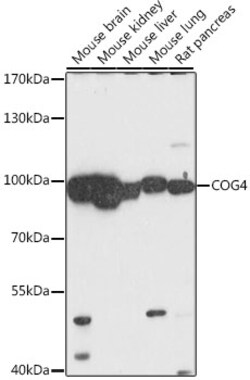
ABclonal Technology COG4 Rabbit pAb
The protein encoded by this gene is a component of an oligomeric protein complex involved in the structure and function of the Golgi apparatus. Defects in this gene may be a cause of congenital disorder of glycosylation type IIj. Two transcript variants encoding different isoforms have been found for this gene.
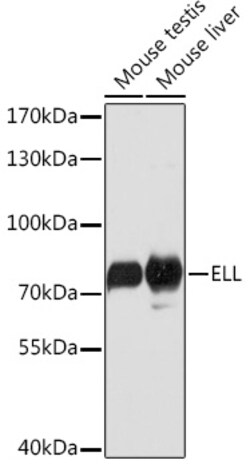
ABclonal Technology ELL Rabbit pAb
Enables phosphatase binding activity. Involved in positive regulation of transcription, DNA-templated and snRNA transcription. Located in cytosol, nuclear body, and transcriptionally active chromatin. Part of transcription elongation factor complex.
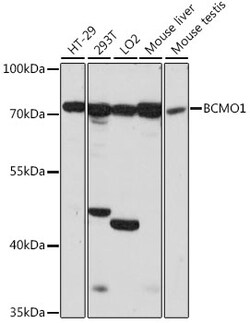
ABclonal Technology BCMO1 Rabbit pAb
Vitamin A metabolism is important for vital processes such as vision, embryonic development, cell differentiation, and membrane and skin protection. The protein encoded by this gene is a key enzyme in beta-carotene metabolism to vitamin A. It catalyzes the oxidative cleavage of beta,beta-carotene into two retinal molecules.
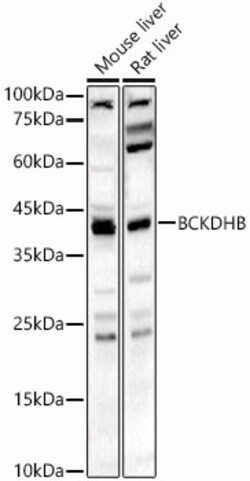
ABclonal Technology BCKDHB Rabbit pAb
This gene encodes the E1 beta subunit of branched-chain keto acid dehydrogenase, which is a multienzyme complex associated with the inner membrane of mitochondria. This enzyme complex functions in the catabolism of branched-chain amino acids. Mutations in this gene have been associated with maple syrup urine disease (MSUD), type 1B, a disease characterized by a maple syrup odor to the urine in addition to mental and physical retardation and feeding problems. Alternative splicing at this locus results in multiple transcript variants.